
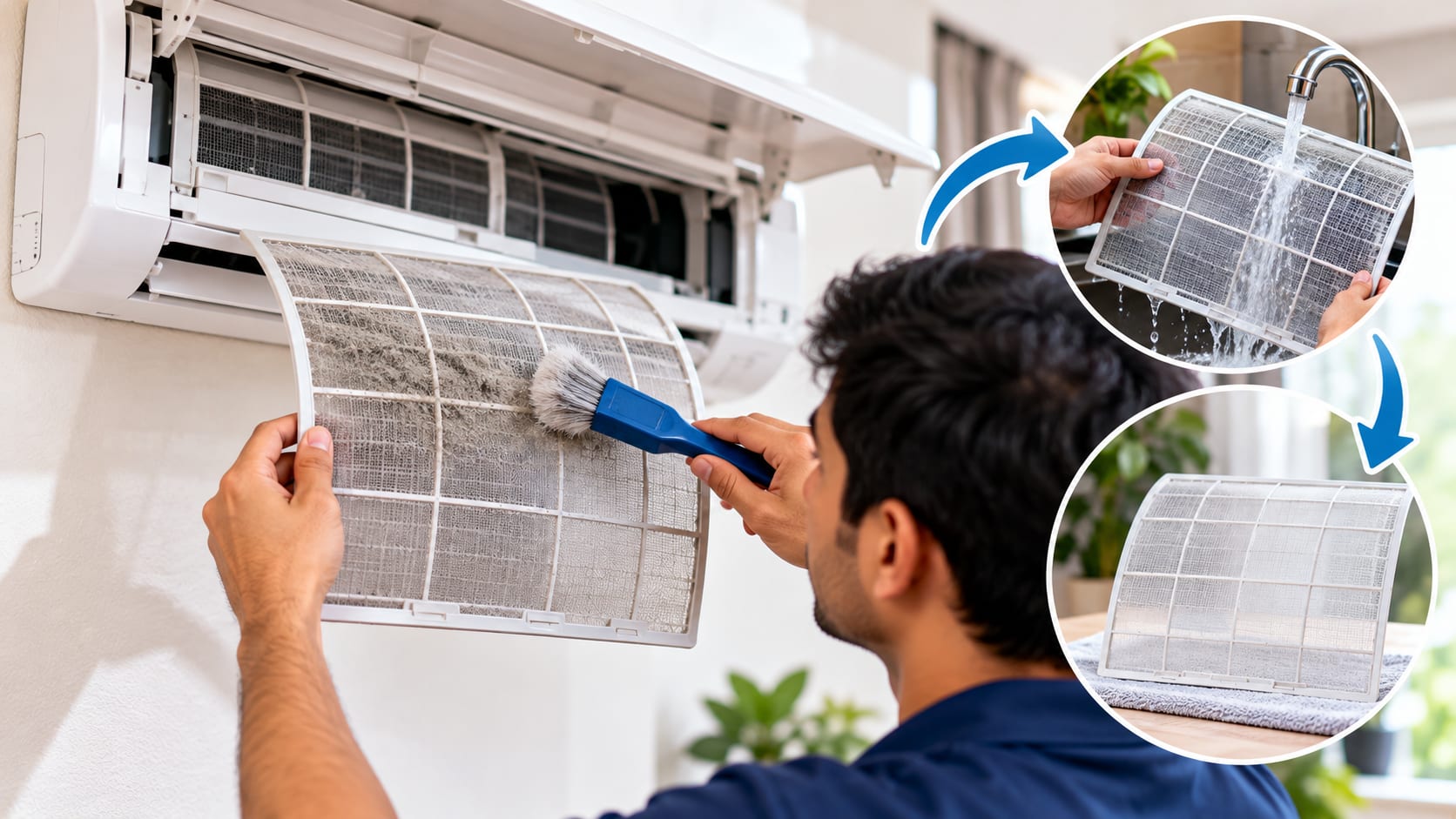
Your AC may be running, but is the air coming out as strongly as it used to? Before calling a technician, take a look at the filter. It collects dust and dirt during everyday use, and after some time, that buildup can start blocking the airflow. The good news is that cleaning the filter is usually a simple job you can do at home.
Learning how to clean an AC filter is a simple way to look after your air conditioner between regular servicing visits. You can clean many standard split and window AC filters at home, and you usually need only a soft brush, a vacuum cleaner, or water if the filter is washable.
The important thing is to avoid rushing. Some filters are designed to be washed, while others have special materials that can be damaged by water. Here is how to clean your filter safely and recognise when it needs more than a routine wash.
Quick Answer: How Do You Clean an AC Filter?
First, turn off your AC and switch off the power before opening the front panel. Take out the filter gently and brush away the dust. If it can be washed, rinse it with clean water and avoid scrubbing too hard. Leave it somewhere airy and out of direct sunlight until it is completely dry. Put it back only when there is no moisture left.
Why Does Your AC Filter Need Regular Cleaning?
The filter catches dust and other particles as room air passes through the indoor unit. Over time, this layer of dirt can make it harder for air to move through the filter.
You may notice weaker airflow or find that the room takes longer to reach a comfortable temperature. A dirty filter can contribute to these problems, although it is not always the main cause.
Regular cleaning is useful for a few reasons:
- Better airflow: Removing accumulated dust helps air pass through the filter more easily.
- Routine maintenance: Checking the filter gives you a chance to spot tears, damage, or incorrect fitting.
- Less dirt buildup: Regular attention stops dust from accumulating for long periods.
- Early problem detection: While cleaning, you may notice unusual smells, moisture, or other signs that deserve a closer look.
A clean filter does not replace complete AC servicing and maintenance. The indoor coil, drainage system, outdoor unit, and other components may still need attention.
How to Clean an AC Filter at Home
You do not need to dismantle the air conditioner to clean its normal, removable filter. Follow these steps, and stop if your unit’s design differs from the instructions.
1. Switch Off the AC
Turn off the AC with your remote, then switch off its power supply before opening the unit. Never try to remove the filter while the AC is running. If you are not sure which switch to use, get help from a technician.
2. Open the Front Cover
Most split ACs have a front cover that lifts up to reveal the filters. The design can vary depending on the model, so check the user manual if you are unsure.
Open the cover slowly using the handles provided. If it does not move easily, do not force it. You could break the plastic clips or damage the panel.
3. Take Out the Filter Carefully
Look for the filter tabs or handles and slide the filter out as directed by the manufacturer. Hold the frame rather than pulling hard on the mesh.
You may see dust covering the surface. That is normal after regular use. Avoid reaching deeper into the unit or touching the metal fins behind the filter, as their edges can be sharp and bend easily.
If the filter will not slide out, stop and check the removal instructions rather than trying to pull it free.
4. Remove Loose Dust First
Take the filter to a suitable cleaning area. Use a soft brush or a vacuum cleaner on a gentle setting to remove loose dust from the mesh.
Work slowly and avoid pressing the brush into the material. A stiff brush can damage the mesh, while excessive suction may affect a delicate filter.
For a lightly dusty filter, this may be enough. If dirt remains and the filter is designed to be washed, move on to the next step.
5. Wash It Only If the Instructions Permit
Not every AC filter should be washed. Check the manual or the label supplied with your unit before using water.
For a washable mesh filter, rinse it gently with room-temperature or lukewarm water. If the manufacturer permits it, a small amount of mild detergent can help remove stubborn dirt. Avoid hot water, abrasive scrubbers, strong chemicals, and forceful water jets.
Some air conditioners also contain additional filters for odour control or fine-particle filtration. These may require a different cleaning method or replacement. Do not wash them simply because the main mesh filter is washable.
6. Give the Filter Time to Dry
Shake off excess water gently and leave the filter in a shaded, well-ventilated place. Wait until it is completely dry before reinstalling it.
Avoid using a heater or hair dryer to speed up the process. Direct heat can damage some filter materials. Do not put the filter back while it is damp, even if it looks almost dry.
7. Refit the Filter and Check the AC
Slide the dry filter into its original guides and make sure it sits securely. Close the front panel properly before restoring the electrical supply.
Switch on the AC and check whether the airflow feels normal. If the room still does not cool as expected, do not keep repeating the cleaning process. There may be another issue that needs attention. Read our guide to common reasons an AC is not cooling if the problem continues.
How Often Should You Clean an AC Filter?
There is no single schedule that suits every home. A household that runs its AC for most of the day may need to clean the filter more often than one that uses it occasionally.
As a practical starting point, inspect a standard washable filter about every two weeks during periods of frequent use. Follow your model’s manual if it recommends a different interval.
| Household situation | What to do |
|---|---|
| AC used daily for long hours | Check the filter regularly, starting with a fortnightly inspection |
| Dusty surroundings or nearby construction | Inspect more frequently for visible dust |
| Pets at home | Check for hair and lint buildup |
| AC used occasionally | Inspect the filter before extended use |
| Special or non-washable filter | Follow the specified cleaning or replacement instructions |
These are general suggestions rather than fixed requirements. The filter’s condition and the manufacturer’s guidance should determine the actual cleaning schedule.
Mistakes to Avoid While Cleaning an AC Filter
A little care can prevent damage during what should be a straightforward maintenance task.
Using too much force: Pulling on the mesh or scrubbing hard can tear the filter.
Washing every filter: Some specialised filters are not designed for water. Check the instructions first.
Putting the filter back while damp: Allow it to dry fully before reinstalling it.
Spraying water inside the unit: A washable filter does not mean that the electrical components or the entire indoor unit can be washed.
Opening parts you cannot identify: Do not remove sealed covers or attempt to clean internal components beyond the accessible filter.
Ignoring other warning signs: A clean filter will not fix every cooling problem, water leak, or unusual noise. If you notice persistent dripping, see our guide to why an AC indoor unit may leak water.
Will Cleaning the Filter Make Your AC Cool Better?
It can, especially when a thick layer of dust is restricting airflow. Removing that blockage helps air pass through the filter more easily.
However, weak cooling can have several causes. A dirty indoor coil, an outdoor unit problem, a faulty component, or refrigerant loss may produce similar symptoms. Refrigerant should not simply be topped up without checking why its level is low. Learn more in our guide to AC gas filling and signs of low refrigerant.
After cleaning, check that the filter is correctly fitted and that the remote is set to the intended cooling mode. If the AC still struggles to cool the room, arrange a professional inspection instead of trying to repair internal parts yourself.
When Is It Time to Call an AC Technician?
Some problems are beyond routine filter cleaning. Contact a qualified technician if you notice any of the following:
- The filter is torn, damaged, or will not fit properly.
- The AC continues to provide weak airflow or poor cooling after cleaning.
- Ice forms on the indoor coil or refrigerant pipes.
- Water continues to drip from the indoor unit.
- A persistent musty smell remains.
- The AC makes unusual noises or shows signs of an electrical fault.
If you notice a burning smell, switch off the unit and arrange qualified assistance. Do not open electrical covers, handle refrigerant lines, or attempt to remove ice using sharp tools.
For homeowners and tenants in Pune and Mumbai, Maharashtra AC Service & Repair can assist with professional AC inspection and maintenance when basic cleaning is not enough. You can also review our Pune service area and Mumbai service area pages for local coverage information.
A Simple Habit That Helps You Look After Your AC
You do not need to wait for a cooling problem before checking the filter. Make it part of your normal household routine, particularly during periods when the AC runs every day.
A quick inspection can tell you whether dust is building up, whether the filter is damaged, and whether it needs cleaning. Keep the filter fitted correctly, let it dry completely after washing, and follow the maintenance instructions for your particular model.
If the AC continues to behave differently after cleaning, get the underlying problem checked rather than assuming the filter is responsible. Contact Maharashtra AC Service & Repair if you need professional assistance in Pune or Mumbai.
Frequently Asked Questions
1. Can I wash my AC filter with water?
Yes, if your AC’s filter is designed to be washed. Use gentle water pressure, follow the manufacturer’s instructions, and let the filter dry completely before reinstalling it.
2. How often should I clean an AC filter?
Inspect it about every two weeks during frequent use as a starting point. Dust levels, operating hours, and the manufacturer’s recommendations may require a different schedule.
3. Will a dirty AC filter increase electricity consumption?
A blocked filter can restrict airflow and affect how well the AC operates. The effect on electricity consumption depends on the unit and the underlying conditions, so a dirty filter does not always explain a higher bill.
4. Can I use soap to clean my AC filter?
A small amount of mild detergent may be suitable for a washable filter if the manufacturer permits it. Avoid strong chemicals, abrasive brushes, and hot water.
5. Can I run the AC without its filter while cleaning it?
It is better not to operate the AC without its filter. Reinstall the clean, completely dry filter before switching the unit back on, and make sure it is fitted correctly.