
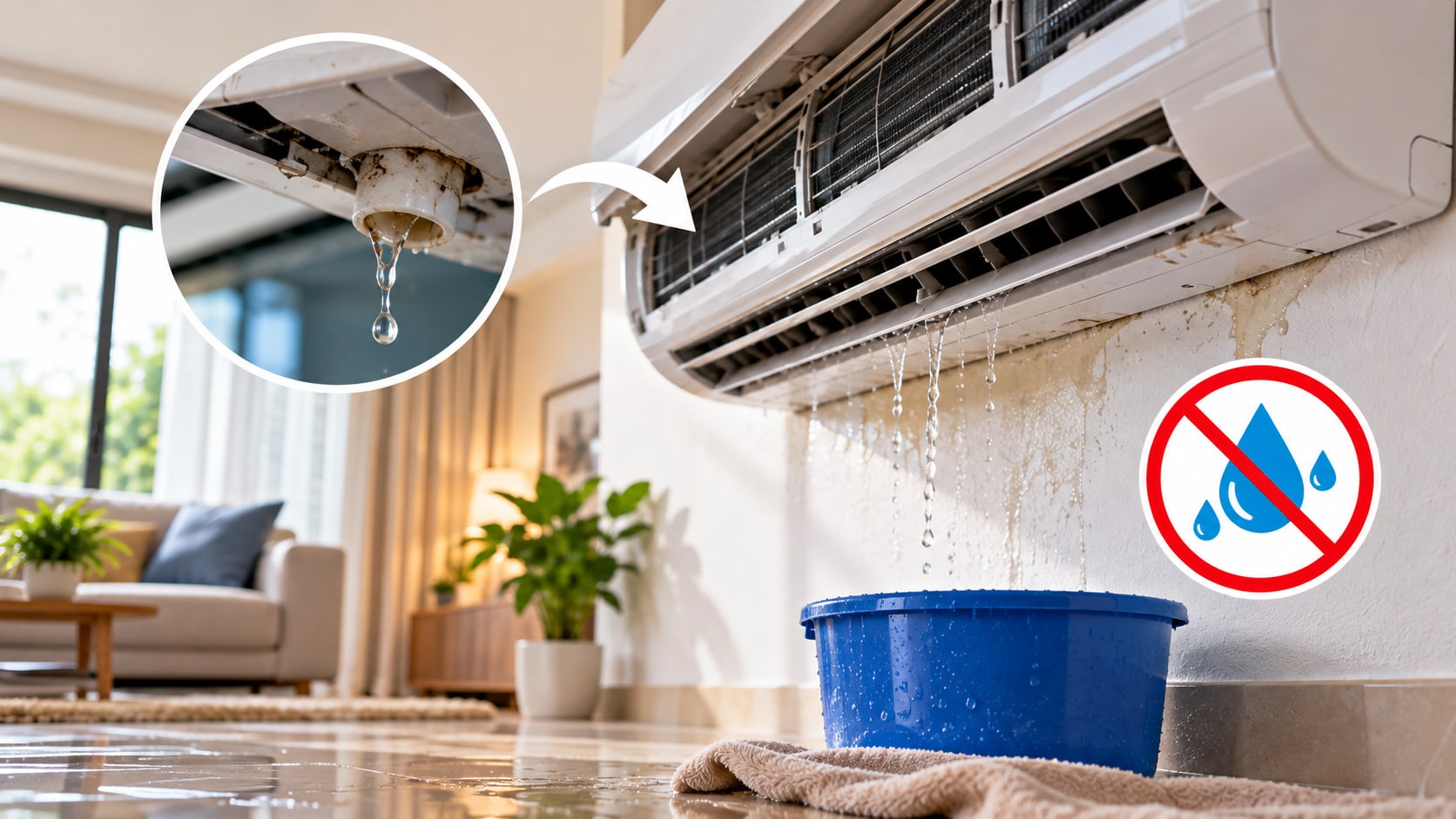
Water dripping from an indoor air conditioner can be frustrating, especially when it falls onto a wall, bed, sofa, or floor. A small leak may look harmless at first, but ignoring it can lead to damp patches, damaged paint, and other moisture problems.
AC water leakage usually happens when condensed water cannot drain properly, the indoor coil freezes and later melts, or the unit has an installation or maintenance problem. The exact cause depends on where the water appears and how the AC behaves.
Before assuming that your AC needs an expensive repair, understand the common reasons for indoor water leakage and which checks you can safely perform at home.
Quick Answer: Why Is Water Leaking From Your AC Indoor Unit?
Water leaks from an AC indoor unit most commonly because of a blocked drain pipe, dirty air filter, frozen evaporator coil, damaged drain pan, or incorrect installation. Switch off the AC if water is dripping heavily or approaching electrical parts. Check only accessible filters and visible drainage outlets; arrange professional inspection if the leak continues.
7 Common Causes of AC Water Leakage
1. Blocked AC Drain Pipe
A blocked drain pipe is one of the common reasons an indoor AC starts dripping water. During cooling, the evaporator coil removes moisture from the air. This moisture collects as condensation and should flow through the drain pan into a drainage pipe.
Dust, algae, slime, and other debris can gradually obstruct the pipe. When water cannot flow out freely, it may collect in the drain pan and overflow into the room.
Signs of a blocked drain pipe:
- Water drips from the bottom of the indoor unit.
- Leakage becomes noticeable after the AC has run for some time.
- Water collects near the wall below the unit.
- The drain outlet releases little or no water during humid conditions, although this alone does not confirm a blockage.
What you can do: Turn off the AC and check whether the visible drain outlet is obstructed, provided it is safely accessible. Do not insert sharp objects into the pipe or dismantle the unit. If the leak continues, ask a technician to inspect and clear the drainage system.
2. Dirty or Clogged Air Filter
A dirty air filter can restrict the airflow needed for normal cooling. When insufficient warm air passes over the evaporator coil, its temperature may drop too low and ice can form.
When the ice melts, excess water may overwhelm the drainage system and leak indoors.
Check the filter if you notice weak airflow, reduced cooling, or visible dust buildup.
What you can do:
- Switch off the AC before removing the accessible filter.
- Clean a washable filter according to the manufacturer’s instructions.
- Allow it to dry completely before reinstalling it.
- If you see ice, stop cooling and let it melt naturally.
Never scrape the ice with a knife or use a heater to melt it. If freezing happens again after cleaning the filter, professional diagnosis is necessary.
3. Frozen Evaporator Coil
The evaporator coil is the indoor component that absorbs heat from the room. It can freeze when airflow is restricted or when a refrigeration-system problem affects its operation.
As the ice melts, water may drip from the indoor unit or flow beyond the drain pan’s capacity.
Common warning signs include ice on the indoor coil or refrigerant pipes, weak airflow, and water leakage after the AC has been running.
What you can do: Switch off cooling and allow the ice to melt naturally. Protect nearby belongings from water, but do not open the unit to reach the coil. A technician should investigate the cause, which may involve airflow, refrigerant levels, or another component.
Low refrigerant can indicate a leak; it should not automatically be treated as a routine gas-refilling requirement.
4. Damaged or Misaligned Drain Pan
The drain pan sits beneath the evaporator coil and collects condensation before it enters the drain pipe. If the pan is cracked, displaced, corroded, or damaged, water may escape even when the drain pipe is clear.
You might notice water dripping from one side of the indoor unit or leakage that returns soon after the drainage system has been cleaned.
Solution: A technician can inspect the pan, its position, and its connections. Depending on the damage and the AC model, the pan may need repositioning or replacement. Avoid removing the indoor unit’s cover to inspect internal parts yourself.
5. Incorrect AC Installation or Drainage Slope
An indoor AC must be installed so that collected water can reach the drain outlet correctly. If the unit is not level as designed, or the drain pipe lacks the required downward slope, water may remain in the pan instead of flowing away.
Poorly connected drain pipes can also allow water to escape at joints.
This problem may appear soon after installation or after the indoor unit has been moved for maintenance.
What you can do: If leakage began after installation or relocation, contact the installer or an AC technician. They can check the mounting position, drainage slope, and pipe connections against the manufacturer’s installation requirements.
Do not try to adjust a wall-mounted AC yourself. The unit is heavy and may contain electrical connections and refrigerant lines.
6. Dirty Indoor Coil or Poor Maintenance
Dust and deposits on the indoor coil can interfere with airflow and normal condensation management. Combined with a dirty filter or drainage problem, this may contribute to water leakage.
A unit that has not been inspected for a long time may also have buildup inside the drain pan or pipe.
Solution: Arrange AC servicing if you notice persistent leakage, reduced cooling, unusual smells, or visible dirt inside the unit. Professional cleaning should include the relevant drainage and coil checks, not just cleaning the outer cover.
Regular maintenance can help identify developing problems, but servicing alone cannot repair a cracked drain pan, incorrect installation, or refrigerant leak.
7. Loose Drain Pipe or Damaged Pipe Connection
Sometimes the drain pipe itself is not blocked. Instead, it may have become loose, disconnected, cracked, or improperly joined to the indoor unit.
Water can then escape through the connection rather than reaching the intended outlet.
Look for visible dripping near the pipe connection only if the area is safely accessible. Do not pull the pipe, remove the unit’s cover, or reach behind electrical components.
A technician can check the connection, replace damaged sections if necessary, and confirm that water drains correctly after the repair.
How to Identify the Possible Cause of an AC Leak
The location and timing of the leak can help narrow down the possibilities.
AC Water Leakage: Symptoms and Possible Causes
| What you notice | Possible cause | Recommended action |
|---|---|---|
| Water dripping from the indoor unit | Blocked drain or damaged pan | Arrange drainage inspection |
| Ice followed by water leakage | Restricted airflow or refrigeration fault | Stop cooling and seek inspection |
| Leakage after installation | Drainage slope or connection issue | Contact the installer |
| Water near a visible drain-pipe joint | Loose or damaged connection | Request pipe inspection |
| Weak airflow and leakage | Dirty filter or frozen coil | Check the accessible filter |
These symptoms are clues, not a confirmed diagnosis. More than one fault can occur at the same time.
What Should You Do Immediately When Your AC Leaks Water?
Follow these steps to reduce the chance of further damage.
- Switch off the AC. If water is near electrical components, do not touch the unit or a wet switch. Isolate the power only if you can do so safely from a dry location; otherwise, seek professional assistance.
- Protect nearby belongings. Move furniture and electronics away from the dripping water if you can do so safely.
- Catch the water. Place a container or absorbent cloth beneath the leak, keeping it away from electrical equipment.
- Check the accessible air filter. Once the unit is switched off, inspect and clean it according to the manufacturer’s instructions.
- Observe the leak. Note whether water comes from the bottom, one side, or a visible pipe connection. This information may help the technician.
- Arrange inspection if needed. Do not restart the AC repeatedly if the leak continues or ice has formed.
Do not pour chemicals into the drain pipe, dismantle the indoor unit, or attempt to repair refrigerant lines yourself.
When Should You Call an AC Technician?
Contact a professional if water leakage continues after basic checks, the indoor unit repeatedly freezes, the drain pipe appears damaged, or the unit has recently been installed or relocated.
Treat water near electrical parts as a safety concern. If you notice sparks, a burning smell, smoke, or electrical tripping, stop using the AC and seek appropriate professional assistance. Keep away from wet electrical equipment.
A technician can inspect the drain pan, drainage line, coil, airflow, installation position, and refrigeration system. The correct repair depends on the cause; simply adding refrigerant or cleaning the filter will not resolve every leak.
AC Water Leakage in Pune and Mumbai
During periods of frequent AC use, dust accumulation and neglected drainage can contribute to maintenance problems. In humid conditions, an AC may also collect substantial condensation, which must drain correctly.
For households in Pune and Mumbai, keep the accessible filters clean, follow the manufacturer’s maintenance recommendations, and arrange an inspection when water starts dripping indoors.
Maharashtra AC Service & Repair provides AC repair and maintenance support within its service coverage. Confirm availability for your locality before booking and ask what the inspection and proposed repair will involve.
Conclusion
AC water leakage is often related to a blocked drain pipe, restricted airflow, a frozen coil, a damaged drain pan, or an installation issue. The location of the water can provide useful clues, but the actual cause may require inspection.
Switch off the unit when leakage is heavy or water approaches electrical parts. Check only accessible components and avoid attempting internal repairs.
If your indoor AC continues leaking, contact Maharashtra AC Service & Repair to enquire about professional inspection in Pune or Mumbai.
Frequently Asked Questions
1. Is it normal for an AC indoor unit to leak water?
No, water dripping from the indoor unit into your room is not normal. Condensation should flow through the drainage system, so persistent indoor leakage needs investigation.
2. Can a blocked drain pipe cause AC water leakage?
Yes, a blocked drain pipe can prevent condensation from escaping and cause the drain pan to overflow. A technician can clear the blockage and check that the water drains correctly.
3. Can I use my AC while it is leaking water?
It is safer to switch it off until the cause is understood, especially if water is dripping heavily or approaching electrical parts. Do not restart it if ice, electrical warning signs, or persistent leakage are present.
4. Why does my AC leak water after cleaning?
Water leakage after cleaning may result from a displaced filter or component, a disturbed drain connection, or an existing drainage blockage. If the leak continues, have the installation and drainage system inspected.
5. How can I prevent AC water leakage?
Clean the accessible filter regularly, follow the manufacturer’s maintenance guidance, and arrange servicing when airflow or drainage problems appear. These steps help reduce risk but cannot prevent every mechanical or installation fault.